
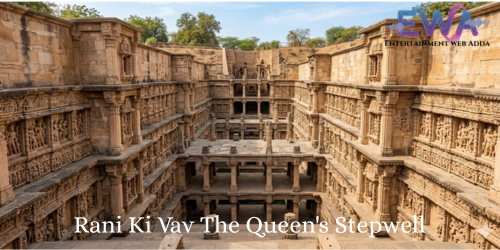
Rani Ki Vav: The Queen’s Stepwell
Rani Ki Vav A look at India’s stunning underground masterpiece.
What is Rani Ki Vav?
Rani Ki Vav literally means “The Queen’s Stepwell.” But it’s much more than just a place to store water. It is built like an “inverted temple”—instead of reaching up toward the sky, this massive stone structure goes deep into the ground. Located in Patan, Gujarat, it is so famous that it’s a UNESCO World Heritage site and is even pictured on the back of India’s ₹100 note!
A Story of Love
This beautiful stepwell was built nearly 1,000 years ago. It was started by Queen Udayamati to honor the memory of her husband, King Bhima I. It’s hard to imagine the amount of work it took to carve out a seven-story building entirely underground.
For a long time, the world forgot it existed. The Saraswati River flooded and buried the stepwell under layers of mud. It stayed hidden for centuries until it was finally rediscovered in the 1940s and cleaned up by experts in the 1980s.
Amazing Art and Design
Rani Ki Vav is massive—about 65 meters long and 28 meters deep. It has seven different levels of stairs, and every inch is covered in beautiful stone carvings.
Gods, Dancers, and Fashion
The carvings don’t just show religious figures; they also show what life was like back then. When you look at the walls, you’ll see:
- Gods and Goddesses: Beautiful images of Vishnu, Shiva, Brahma, and Durga.
- Dancers: Carvings of women (Apsaras) doing simple things like combing their hair, putting on lipstick, or even dealing with a pesky monkey.
- Fashion: Some wall patterns look exactly like the famous Patola sarees that people in Gujarat still wear today.
Why It’s Special Today
Rani Ki Vav shows us that our ancestors were geniuses at engineering and art. It reminds us of a time when water was treated as something sacred. In 2016, it was even named the “Cleanest Iconic Place” in India. If you love history and beautiful architecture, this is a place you have to see.
Learn More:
Want to dig deeper? Check out these links:
Rani Ki Vav on Wikipedia More Interesting History