
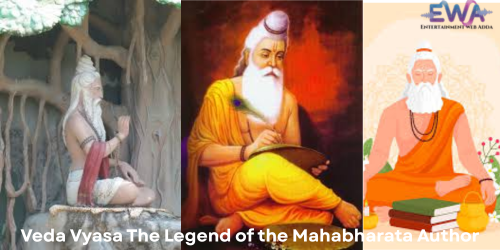
Veda Vyasa: The Sage Behind India’s Greatest Epics
In the world of ancient Indian wisdom, one name stands above almost everyone else: Veda Vyasa. If you have ever read a verse from the Vedas or heard the story of the Mahabharata, you have touched the work of this legendary sage. Known as the “Compiler,” Vyasa is seen as a central figure in most Hindu traditions.
Who Was Veda Vyasa?
Born as Krishna Dvaipayana, his name tells a story of its own. “Krishna” refers to his dark complexion, and “Dvaipayana” means “island-born,” as he was born on an island in the Yamuna river. He was the son of the wandering sage Parashara and a fisherwoman named Satyavati. From a very young age, he was destined for greatness and spiritual depth.
The Great Classifier of the Vedas
Before Vyasa, the Vedas were a single, massive body of oral knowledge. Legend says that Vyasa realized that as time passed, it would be harder for people to memorize and understand such a huge amount of information. To help humanity, he cleverly split the one Veda into four: the Rigveda, the Yajurveda, the Samaveda, and the Atharvaveda. This is why he is famously called “Veda Vyasa.”
The Author of the Mahabharata
Vyasa isn’t just a compiler; he is an incredible storyteller. He is the author of the Mahabharata, the longest epic poem ever written. But he wasn’t just the writer; he was also a character in the story! He was the grandfather of both the Pandavas and the Kauravas. It is said that he dictated the entire epic to Lord Ganesha, who wrote it down using his own tusk.
A Legacy That Never Ends
Beyond the Vedas and the Mahabharata, Vyasa is also credited with writing the eighteen major Puranas and the Brahma Sutras. His works cover everything from philosophy and politics to love and war. Even today, thousands of years later, his teachings form the backbone of Indian culture and spirituality.
Veda Vyasa reminds us that knowledge is the greatest treasure one can leave behind. He organized the wisdom of the past so that future generations could find their way.





Pingback: The Story Behind the 10 Heads of Ravana