
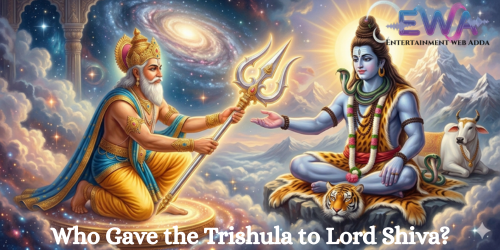
The Cosmic Origin: Who Gave the Trishula to Lord Shiva?
In the vast and colorful tapestry of Hindu mythology, few symbols are as instantly recognizable as the Trishula (the trident). Held firmly in the hand of Lord Shiva, it isn’t just a weapon; it is a profound symbol of power, balance, and the very mechanics of the universe. But have you ever wondered where it came from? Did Shiva always have it, or was it a gift from someone else?
If you dive into the ancient texts, particularly the Puranas, the story of how Shiva received his trident is as fascinating as the god himself. Let’s explore the divine “blacksmithing” that brought this legendary weapon into existence.
The Divine Architect: Vishwakarma
While Lord Shiva is an eternal being, many of his physical attributes and weapons are explained through stories of divine creation. The most widely accepted origin story involves Vishwakarma, the celestial architect and the craftsman of the gods.
The story begins with Surya, the Sun God. Surya was married to Sanjana, the daughter of Vishwakarma. However, Surya’s brilliance and heat were so intense that Sanjana found it impossible to stay near him. She was literally being scorched by her husband’s blinding glory. Seeking a solution, her father Vishwakarma decided to intervene.
This “solar dust” or extra energy shaved off from the Sun was not wasted. It was the most powerful substance in the universe. From these glowing, celestial remnants, Vishwakarma forged several incredible weapons for the gods. He crafted the Pushpaka Vimana (the flying chariot), the Sudarshana Chakra for Lord Vishnu, and, of course, the Trishula for Lord Shiva.
Why the Trident? Understanding the Symbolism
Shiva didn’t just receive a weapon; he received a tool that represented his role in the universe. The three prongs of the Trishula are often said to represent the three fundamental “Gunas” (qualities) of existence:
- Sattva: Purity and peace.
- Rajas: Passion and activity.
- Tamas: Darkness and chaos.
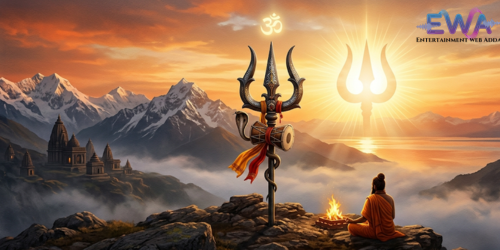
By holding the Trishula, Shiva signifies that he is the master of these three forces, keeping the world in a state of balanced motion. It also represents the three stages of time—Past, Present, and Future—showing that Shiva is the master of time (Mahakala) himself.
A Gift of Balance
When Vishwakarma handed the Trishula to Shiva, it marked the completion of the “Mahadev” persona we know today. It was a gift born from the sun’s fire, tempered by a father’s love for his daughter, and wielded by the destroyer of ego. Unlike other weapons used for conquest, Shiva’s Trishula is often used to restore Dharma and protect the innocent, proving that even the most fearsome power can be used for the greatest good.
Next time you see an idol or a painting of Lord Shiva, look closely at that trident. It isn’t just metal; it is the captured essence of the sun, crafted by the hand of a divine architect, and held by the one who keeps our universe in harmony.
Learn More & References
For more deep dives into the history and significance of the trident, check out these resources:
- Explore the cultural and historical impact: Detailed History of the Trishula (Wikipedia)
- Read about other divine artifacts and cosmic stories: Akshaya Patra: The Eternal Grace



Pingback: The Legend of Ravana: The Multi-Faceted King of Lanka