
Baijnath Temple : Amidst the peaceful foothills of the magnificent Dhauladhar ranges, in the Kangra district of Himachal Pradesh, lies the famous Baijnath Temple, one of the most fascinating ancient shrines in northern India, which is devoted to Lord Shiva as ‘Vaidyanath,’ which means ‘Lord of Physicians.’ The temple was constructed in the year 1204 AD by two local merchants named Ahuka and Manyuka.
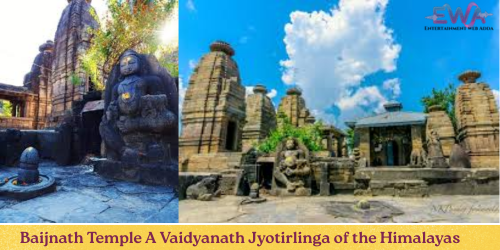
Baijnath Temple
A Historic Sanctuary of Shiva
The history and legend of Baijnath Temple go deep into history. However, although the temple as it exists today has records dating back to the early 13th century, it has evidence of another even older structure having existed at this location through scripts on the walls, which are in Sanskrit and in local script. These scripts speak of this temple being built and dedicated to Lord Shiva.
There’s an interesting legend regarding the temple, which links it to the demon king of Lanka, Ravana, from the Ramayana series. It’s a local legend that states that Ravana worshiped Shiva at Mount Kailash, where he received an invincible lingam but on the condition that this lingam must never come into contact with the ground. However, when he rested at Kiragrama, which is the modern Baijnath, he did, in fact, lower the lingam, which became immovable. That’s why the place became sacred.
Click here for Aravalli Forest Northern India.
Architectural Wonder in Nagara Style
Baijnath temple architecturally represents a magnificent example of temple architecture in the ‘Nagara’ style, which was very popular in North India. The temple is built of carefully carved stone, and the most distinctive feature of this temple is its high curvaceous ‘shikhara’ or spire rising above the shrine housing the Shiva lingam.
The temple complex is comprised of a spacious mandapa with ornately carved columns, a vestibule known as antarala that connects with the garbhagriha or sanctum sanctorum, as well as a grand entrance flanked by the statues of the holy Nandi bull watching over Lord Shiva. The walls are adorned with beautiful carvings of gods and goddesses, mythological scenes, flowers, and characters from Hindu mythology.
The smaller shrines in the temple complex are devoted to various deities such as Ganesha, Harihara, Bhairava, and Narmadeshwar. The temple property has faced several natural disasters, like the Kangra earthquake of 1905, which was a major disaster, and has been revived under the reigns of rulers like Sansar Chand, yet it maintains its original charm.
Attractions and Travel Tips – Nearby Sights
Baijnath itself is a quaint Himalayan town situated approximately 16 km away from Palampur and can easily accessed by road through the Pathankot-Mandi national highway. The airport and the railway station are at Gaggal, near Dharamshala, and Paprola, respectively.
Near By Attraction
- Mukut Nath Temple at Sansal (~6 km) – an exclusive hill shrine.
- Awahi Nag Temple (~1.5km) – well-known for the worship of serpent deity.
- Mahankal Temple (~5 km) – another local religious site.
- Monasteries in Tibet near Sherabling, Chauntra, and Chowgan are culturally enlightening as well as scenic.
- Bir Billing, a nearby location, is a famous paragliding and adventure sports destination.




Pingback: Bajreshwari Mata Temple Stands as one of A 51 Shakti Peethas