
Taj Mahal : The Taj Mahal’s actual history is explored in the well-known film “The Taj Story,” which stars Paresh Rawal. It demonstrates how Shah Jahan, the Mughal ruler, did not complete the monument. Rather, the movie suggests that Raja Man Singh was the real creator, with Shah Jahan adding modifications thereafter.
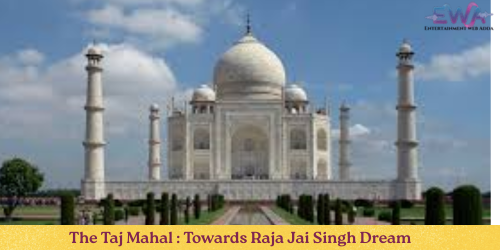
The Taj Mahal’s roots are shockingly revealed in the Paresh Rawal-starring film The Taj Story (2025). It demonstrates how Rajput ruler Raja Man Singh originally designed the monument rather than Mughal emperor Shah Jahan building it from the ground up. The movie uses historical documents to demonstrate that Shah Jahan just altered an already-existing building.
The Original Invention of Raja Man Singh
In the sixteenth century, Raja Man Singh, a strong Rajput leader under Akbar, constructed a magnificent palace on the site of the Taj Mahal. This is emphasized in The Taj Story through the use of historical maps and court documents. The protagonist of the film, Vishnu Das, a tour guide, discovers that this palace was a “splendid domed edifice” that Man Singh’s grandson Raja Jai Singh inherited.
The building’s marble work and domes, which are characteristic of Rajput architecture, complemented the Taj’s core design. Scenes from the movie depict how Man Singh intended it to be a home close to the Yamuna River in Agra.
Jyothi Yarraji India’s Rising Star in the 100m Hurdles.
Shah Jahan’s Land Agreement and Modifications
Following Mumtaz Mahal’s death in 1632, Shah Jahan purchased the estate from Raja Jai Singh. According to the Taj Story, this was a forced transaction in which Shah Jahan handed Jai Singh additional assets while maintaining the palace.
Important Evidence from the Film
- The Taj Story provides convincing proof that Raja Man Singh was the founder: Contradictions on the ASI Website:
- Records from the Archaeological Survey of India state that while construction was completed in 1648, Mumtaz’s remains was interred in the crypt six months after her death in 1631. This demonstrates the building’s prior existence.
- Padshahnama Chronicles: The location is referred to be Raja Man Singh’s “house” or palace rather than vacant ground in Mughal writings such as Abdul Hamid Lahori’s Padshahnama. Shah Jahan repurposed the building, hence no architect is attributed for him.
- No Demolition Records: There is no evidence in court records that Man Singh’s palace was demolished. The movie depicts PIL cases in the Delhi High Court that call for ASI to look into this gap.
- Documents from Jaipur Palace: Shah Jahan purchased the property from Jai Singh, according to records at Jaipur’s City Palace, connecting it to Man Singh’s time.
Instead of Shah Jahan, SJ as the modifier, this revelation recognizes Raja Man Singh as the real originator. For the complete exposure, watch The Taj Story.